Old Growth Forests with Ashley Martens
When: June 13, 2026
6PM potluck dinner and Burnt Tree Brewing keg. Pulled pork sandwiches will be provided, please bring a side dish, salad, or dessert.
7PM talk starts
Who: Ashley Martens - Old Growth Forest Network
Where: At Jack Creek Preserve Foundation’s Outdoor Education Center. DIRECTIONS
Access: The GATE CODE WILL BE 061326#. Parking is limited, carpooling is strongly encouraged!
What: What’s so special about old-growth? “All forest stages have an important ecological role to play. The old-growth stage is especially important because of its unique structure. Various canopy layers and berry-producing plants are beneficial for many bird species. In a forest that has not been disturbed for hundreds of years some trees will develop hollow cavities. These cavities become important nesting places for animals. In an undisturbed forest some large trees will die and fall, creating yet more habitat: numerous insects, fungi, reptiles and amphibians benefit from the fallen trees. The moisture retained within an old-growth forests benefits lichen and mosses, and the species that live among the mosses and lichens. Old-growth forests are one of the few land uses where topsoil is created instead of destroyed. More carbon and nitrogen is retained in an old-growth forest than in forests of other age classes. For improving water quality and air quality there is nothing better than an old-growth forest.” Ashley will speak about the wonders and diversity of types of old-growth forests in Montana and how to recognize them.
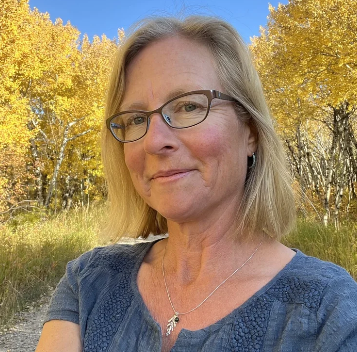
About the Speaker: Ashley Martens
Ever since hand-feeding chickadees with her grandparents as a young child, Ashley has sought out intimate relationships with nature through both scientific inquiry and mindful nature-connection. After meandering her way through studying the life sciences in her young adulthood, she finally settled on a B.S. in Biology, an M.S. in Environmental Science, and certifications in teaching yoga, dance, and meditation. She has studied with leading researchers at various Universities and renowned teachers from the Wilderness Awareness School through the Art of Mentoring. Becoming a naturalist takes time and attention — from hunting for arrowheads in the gullys of high-desert Wyoming as a child, to surveying woodpeckers in the backwoods of north Idaho, to researching seabirds on a remote wildlife refuge island in the Straight of Juan de Fuca, to reintroducing Mountain Quail in eastern Washington, Ashley weaves all of her experiences into her work. She brings her values of lifelong-learning and community-building forward in her teaching and facilitation. Her approach is to empower your learning journey by guiding you to learn from nature, rather than simply about it.